Old handwriting, made readable
Finally read the handwritten letters your family kept.
Can’t make out the old cursive, or the language your family stopped speaking? Photograph the page. Heirloom gives you the words as typed text and in plain modern wording, with an English translation when you need one, all beside the original.
Your first page is free, with no card and no subscription. After that you see the exact cost before you pay.
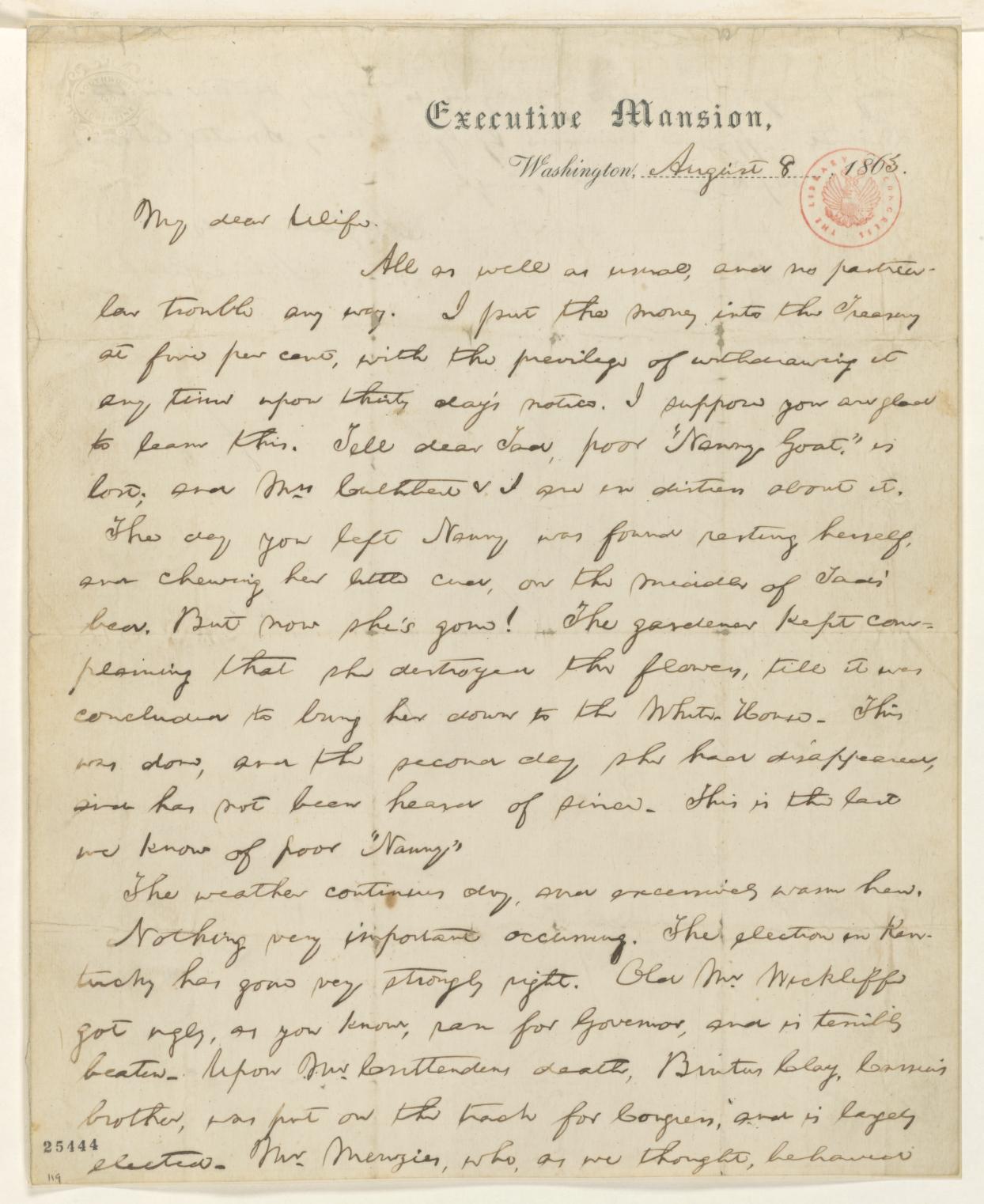
Executive Mansion, Washington, August 8, 1863. My dear Wife. All as well as usual, and no particular trouble any way. I put the money into the Treasury at five per cent, with the privilege of withdrawing it any time upon thirty day's notice. I suppose you are glad to learn this. Tell dear Tad, poor "Nanny Goat" is lost; and Mrs Cuthbert & I are in distress about it.
Executive Mansion, Washington, August 8, 1863. My dear wife, All is as well as usual, and there is no particular trouble in any way. I put the money into the Treasury at five percent interest, with the privilege of withdrawing it at any time upon thirty days' notice. I suppose you are glad to learn this. Tell dear Tad that poor "Nanny Goat" is lost, and Mrs. Cuthbert and I are in distress about it.
- No subscription Pay only for the pages you read.
- Failed readings are free The credits go straight back.
- A private library Stored encrypted. Delete it any time.
- Never used to train AI Your family’s letters stay yours.
In short
What is Heirloom?
Heirloom is a web app that turns photos of old handwritten letters into text you can read. It gives you a faithful transcription, the same words in plain modern wording, and an English translation when the letter is in another language, always beside the original page so you can check it.
- What it reads
- Handwritten letters, diary pages and old documents: old cursive, faded pencil, and old German scripts such as Kurrent and Sütterlin.
- What you get
- A typed transcription, plain modern wording and an English translation, each beside the scan and editable.
- What it costs
- The first page is free. After that, prepaid page credits with no subscription. One credit reads one page, and a failed reading costs nothing.
- Where it works
- In the browser on a phone, tablet or computer. Nothing to install.
What people bring
Kept for generations. Hard to read today.
Grandma’s cursive
Joined-up letters, unfamiliar capitals, shortened names like Wm. You can tell it matters. You just can’t make out the words.
How to read old cursiveLetters home from the war
Written in a hurry, often in pencil, then folded away for decades. Photograph them while the pages can still be read.
Feldpostbriefe lesen (auf Deutsch)A language the family stopped speaking
German, Polish, Italian, Yiddish and others. Heirloom reads the original, then gives you English. It can also attempt old German scripts like Kurrent and Sütterlin.
Translating old letters
Honest about mistakes
It isn’t perfect. That’s why the original stays beside it.
Readings come from an AI model, and AI makes mistakes, especially with names and dates. So you can always compare every line with the page, and correct anything it got wrong.
We left this one in so you can see the kind of thing to look for.
- Lincoln wrote
- “previlege”
- Heirloom read
- “privilege”
Public-domain scan. Credit: Library of Congress, Manuscript Division, Abraham Lincoln Papers. Open the full page or view the original item and rights statement. Heirloom reading generated October 11, 2026.
From photograph to readable text
How it works
Photograph the pages
Phone photos or a PDF scan of one letter. Put the pages in reading order and remove any that don’t belong.
See the exact cost
One credit reads one page. You see the total before you buy anything.
Read it beside the original
The transcription, modern wording and any translation sit next to the page so you can check every line.
Correct it and keep it
Fix a name or a date, keep the letter in your private library, then print it or download the text for the family.
Pricing
Pay for the pages you read. No subscription.
Credit packs
Credit-pack prices load here when the reader connects. The exact price is confirmed before you pay.
There is no subscription. You only pay when you choose a pack and continue to Stripe checkout.
- One credit reads one page, meaning one side of paper you choose to read. A sheet written on both sides uses two.
- Exact cost first. You buy a pack before your first reading, and the review step shows how many credits the letter needs.
- A failed reading costs nothing. Its credits go back to your balance.
- Credits don’t expire while your account is open.
- Up to five pages per reading. Longer letters can be read in parts.
Before you start
Questions people ask first
Something else on your mind? Ask us.
What is Heirloom?
Heirloom is a web app that reads old handwritten letters. You upload a photo or PDF scan, and it returns a typed transcription, the same text in plain modern wording, and an English translation when the letter is in another language. The reading is shown beside the original page so you can check and correct every line.
How much does Heirloom cost?
Your first page is free: every new account can read one page without paying or entering a card. After that there is no subscription. You buy a pack of page credits, and one credit reads one page, meaning one side of paper. You see the exact number of credits a letter needs before you pay, and a failed reading costs nothing. Current pack prices are listed under Pricing on this page.
Can it read old German handwriting such as Kurrent or Sütterlin?
Heirloom can attempt old German scripts like Kurrent and Sütterlin, and it reads letters in German, Polish, Italian, Yiddish and other languages before giving you English. These scripts are hard, so check names, places and dates against the page. Our guide to Kurrent and Sütterlin shows what to look for first.
Will it be able to read my letter?
It depends on the handwriting, the language and the photo. A clear, evenly lit picture helps more than anything else. Faded, torn or very dense pages sometimes defeat the reader. Our photo checklist shows how to get the best result.
What happens if a page can’t be read?
When a reading fails, the credits held for it are released back to your balance and you can try clearer photos. If Heirloom can’t confirm whether a reading finished, its credits stay on hold until that is resolved. It is never sent twice or charged twice.
Can I trust the names and dates?
Check them. AI can misread names, dates and numbers, which is why the page stays beside the text and every line can be corrected. For family history research, treat a reading as a starting point, not as proof of who someone was.
Are my letters private?
Pages and readings are stored encrypted in a private library that only your account can open. To make a reading, the pages you choose are sent to Google’s Gemini API under terms that don’t let Google use them to improve its products, and Heirloom doesn’t use your letters to train AI. You can delete a letter, or your whole account, whenever you choose. Details are in the privacy notice.
What can I upload?
Handwritten letters, diary pages and old documents, as JPEG, PNG, WebP, HEIC, HEIF or PDF files up to 10 MB each. A reading covers up to five pages, and longer letters can be read in parts.
Do I need to install anything?
No. Heirloom runs in your browser on a phone, tablet or computer. Sign in with an email code or your Google account; there is no password to remember. There is also a separate iPhone app that can read letters aloud. It is sold as a subscription, and its purchases are separate from credits bought here.
Start with the letter you’ve always wondered about.
Upload it, check the pages and see exactly what the reading costs before you buy anything.
Free guides
Prefer to work through it yourself?
Free guides for reading old letters. Or convert cursive handwriting to text with Heirloom.
- How to read an old letterCan't make out an old letter, even one written in faint pencil? A six-step method with a worked example: photograph it, learn the letter shapes, and check names and dates.
- Transcribing from photosPhotograph or scan handwritten letters so they can be transcribed well: lighting, page order, file types, transcription conventions and keeping the result.
- Old cursive letterformsCan't read old cursive? Compare tricky letters like the long s, decode abbreviations such as Wm. and recd, and understand dates like inst. and ult. Illustrated, with a real 1863 letter.
- Translating old lettersWhy old letters in German, French, Polish or other languages should be transcribed before they are translated, what makes old scripts hard and how to check a translation.
- Dating an old letterNo date on a letter? Narrow the year with the postmark, the weekday, holidays and events in the text, and old calendar styles, then record how confident you are.
- Kurrent and SütterlinRead old German handwriting with alphabet references, a five-step transcription method and an AI first draft. Check names and dates before translating to English.
- Faded handwritingOld letter too faint to read? Make faded ink and pencil darker in a phone photo, use low-angle light to catch pencil dents, and never retrace the original.
- Reading cursiveNever learned cursive? Learn the letters that look nothing like print, build an alphabet from the writer's own hand, and turn a grandparent's letter into readable text.
- Old letter abbreviationsWhat inst., ult. and prox. mean, plus shortened names like Wm. and Jno., phrases like "yr obt servt", old month forms like 7ber, genealogy terms like relict and ae., and money and military terms.