Heirloom · Cursive translator and reader
Cursive translator: turn old cursive into text you can read.
Upload a photo or PDF of a handwritten letter. Get an editable transcription and plain modern wording, with the original beside both.
First page free · Sign-in required · No subscription
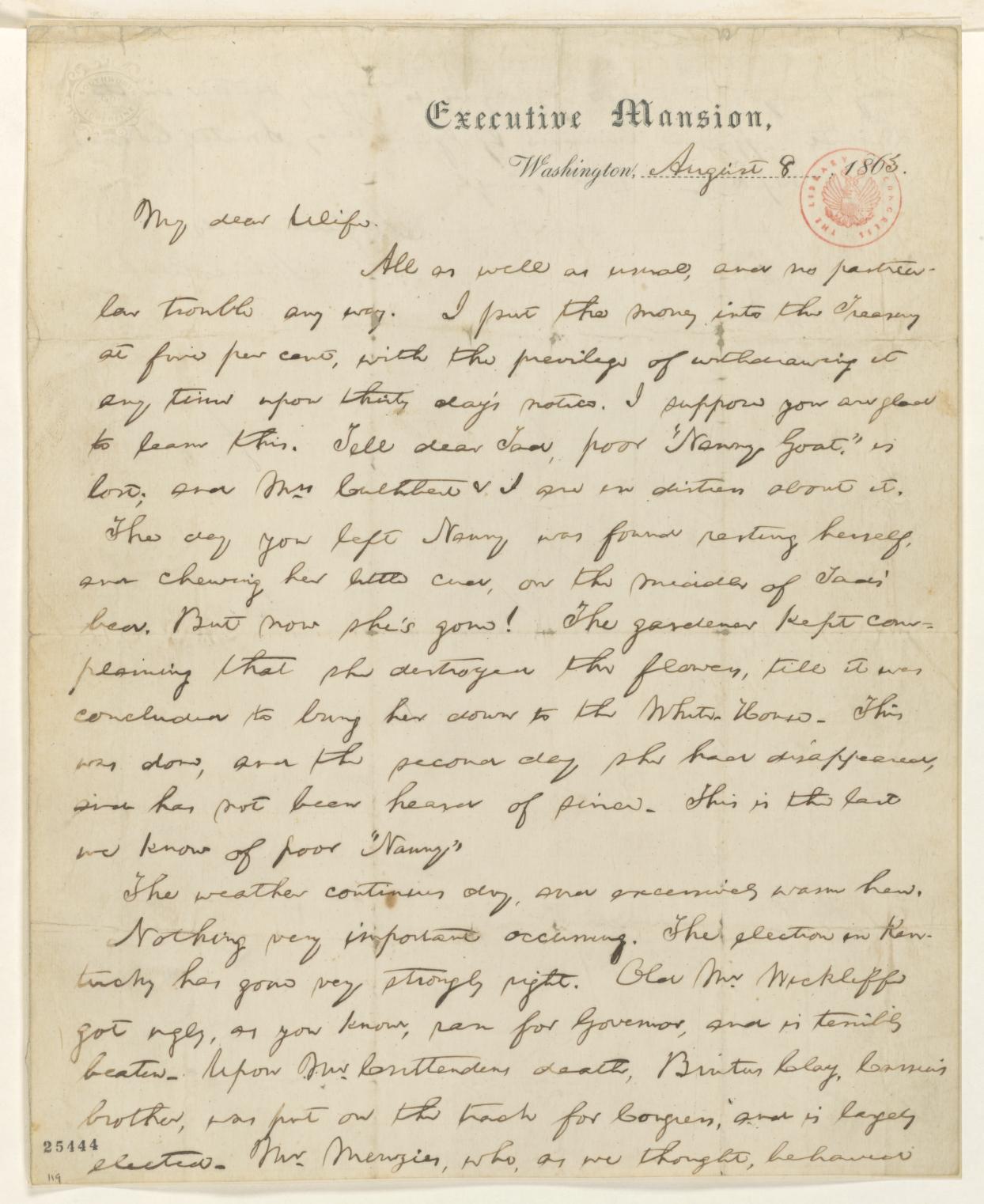
Library of Congress · Public domain
Real letter · Actual Heirloom reading
A family letter from 1863, made readable.
Abraham Lincoln wrote to his wife about money, family and a missing goat. We ran the first page through Heirloom. This is an excerpt from that reading, not a recreated letter.
As generated by Heirloom · opening paragraph only
Executive Mansion, Washington, August 8, 1863. My dear Wife. All as well as usual, and no particular trouble any way. I put the money into the Treasury at five per cent, with the privilege of withdrawing it any time upon thirty day's notice. I suppose you are glad to learn this. Tell dear Tad, poor "Nanny Goat" is lost; and Mrs Cuthbert & I are in distress about it.
Public-domain scan. Credit: Library of Congress, Manuscript Division, Abraham Lincoln Papers. View the original item and rights statement. Heirloom reading generated October 11, 2026.
How the cursive translator works: convert cursive handwriting to text
Photograph or scan the letter
Use even light and include the whole page. Upload JPEG, PNG, WebP, HEIC, HEIF or PDF files, up to 10 MB each. A reading covers up to five pages; the combined upload limit is 16 MB.
Check the order and cost
Arrange the pages before starting. One credit reads one page. The review step shows the page count and credit cost before the reading begins.
Compare the reading with the original
The transcription keeps the writer’s wording; the modern version makes it easier to understand. When the letter is in another language, Heirloom also provides an English translation.
Correct, keep and share the text
Check names, dates and doubtful words against the scan. Edit the reading, keep it in your private library, then download the text or print it.
Pricing
Pay for the pages you read. No subscription.
Credit packs
Credit-pack prices load here when the reader connects. The exact price is confirmed before you pay.
There is no subscription. You only pay when you choose a pack and continue to Stripe checkout.
- One credit reads one page, meaning one side of paper you choose to read. A sheet written on both sides uses two.
- Your first page is free. For additional pages, the review step shows how many credits you’ll use.
- A failed reading costs nothing. Its credits go back to your balance.
- Credits don’t expire while your account is open.
- Up to five pages per reading. Longer letters can be read in parts.
Made for the letters your family kept
Joined-up letters, unfamiliar capitals and shortened names can make an old page hard to read. Heirloom gives you a first reading to check, without asking you to learn a transcription system or train a handwriting model.
Use it for family correspondence and handwritten personal letters. Keep the original scan with the reading so a relative can verify a name or revisit a line later. For genealogical research, a suggested reading is a starting point, not proof of a person’s identity.
Prefer to work through a letter yourself? Our step-by-step reading method and illustrated old cursive guide explain how to compare repeated letter shapes and mark uncertainty.
What a cursive reader can get wrong
AI can misread faded ink, overlapping writing, names and numbers. Missing paper cannot be recovered from a photograph. Review each important detail against the original, and leave an uncertain word marked rather than accepting a plausible guess.
A clearer photograph often helps more than another attempt with the same blurry image. See our photo and scan checklist. When a reading fails, its held credits are released; a completed reading can still need corrections.
Questions about reading cursive online
- Can AI really read cursive?
- Yes, usually well enough for a first draft you then check. We scored the reading above against the Library of Congress transcript: 68 of 69 words matched, and the one difference was a spelling the AI quietly modernised. See Can AI read cursive? for the full check and where AI still goes wrong.
- Is Heirloom a free cursive-to-text converter?
- The first page is free: sign in and every new account can read one page of its own letter without paying or entering a card. Further pages use prepaid page credits, with no subscription. The examples and guides are always free to read.
- Does it work on old cursive?
- Heirloom can attempt old handwritten letters, including joined-up cursive. Results depend on the handwriting and image quality. The historical example above shows one actual result, not a guarantee for every script or page.
- What is cursive transcription, and is it the same as translation?
- Cursive transcription means converting handwriting into typed text. Translation changes the language. Heirloom keeps a transcription and modern wording separately, and adds an English translation when the original uses another language.
- Do I need to install an app?
- No. The web reader runs in your browser on a phone, tablet or computer. Sign in, upload the pages, check the cost and start the reading.
- Are my uploaded letters public?
- Your pages and readings are stored in your private account library, not published like the public-domain example here. You can delete letters or your account. Read our privacy notice for storage and AI-processing details.
Start with one handwritten page.
Bring a clear photo. Your first page is free. Keep the original beside the text, and check what matters.
Read your cursive letter